Friday, 29 March 2013

Evaluation (1)

In what ways does your media product use, develop or challenge forms and conventions of real media products?

Horror trailers generally follow conventions, this is often to indicate that the genre of the film, horrors tend to use darker colours and less lighting than a comedy would, along with different types of music. Along with following particular conventions, trailers can often break them too, in order to stand out from the rest of the genre and become unique (though this can be a risky technique). Some conventions followed by the genre are setting the scene, a show of normality, the appearance of evil, realisation of evil, a show of pain, some text explaining events, pursuit, release text and a final glimpse. All of these appear in our created media product, and have been compared to The Strangers.

Setting the scene
Setting the scene is important in all film trailers, to give an understanding of where the story is taking place. It is often a long shot or establishing shot, and we can see how both our trailer and The Strangers use this effectively. The colour scheme and lighting in our trailer is much brighter in comparison to create a sense of normality, which then fades, whereas The Strangers achieves this in other ways.


A sense of normality

These two shots represent normality; feeling secure, stable and safe, which is conventional of most horrors in the early areas of the film. While our trailer shows four characters interacting in a daily way, The Strangers features just two, and so the shot sizes are different.


An evil presence

Another important point in a horror movie is the hint of an evil presence, in which we often see the character in the background subtly. They usually do not interact with the character in the foreground, but simply observe them. We chose to follow this convention as it is an effective way to introduce the "villain" character without giving much information away.


Realisation
Eventually, the characters realise something is out of the ordinary, and this features them looking towards something off-screen, this is effective as it hides the horror and adds mystery for a brief moment. The two shots featured here show character realisation well.


An important feature in modern horror is torture, or expressions of pain/suffering. We decided to show this more through audio than camera work (since we had minimal special effects to work with), but the relation between these two shots is still evident.


Pursuit

Trailers commonly feature pursuit, a character being hunted or at least trying to escape it. Though we are never shown the result it leaves the viewer wanting to know the result and this is where the effectiveness of the shot lies. Our shot features the main character looking for the plague doctor stalking her rather than running directly from it.


Text teasers

Between clips, trailers often include small chunks of text, hinting at the theme of the film or trying to capture the viewers attention. The font and size is unique to the film and contributes to the film's identity.


Last glimpse

After text (and most likely appearing at the end of the clip) is a last glimpse, or jump scare of the source of horror. This is an attempt to keep it lingering in the viewers mind, wanting more. We used this method and created a short clip, appearing at the end, featuring the plague doctor standing over the main character.


Release date

Following the same font rules as the text before it, the date appears at the very end of the trailer. A convention that is common with all trailers (except teasers).


Teaser trailers are a different brand of advertising completely. They intend to give little a way but draw as much attention as possible, and in doing so comply with conventions and break them. They need to be original but follow a scheme. Essentially, the purpose of a teaser trailer is to become viral, to have been seen by as many people as possible and interest those people. These are often short, showing little to no actual story but somehow remaining in the viewers memory. In horror teaser trailers, the main convention is being short with a jump scare.


Sound in a trailer (particularly horror) is very important, and so selection of the right effects, dialogue and music was crucial. It was decided that we would use a piano based song for the majority as they can generally be perceived as creepy. Most other sound effects would be string based (violin etc.) for contrast. In terms of dialogue, very little was used as trailer very rarely contain much, the lines that were used were not in a continuous streak but made sense in the sequence they were placed.

Tuesday, 26 March 2013

Monday, 25 March 2013

Analysis of 3 magazine covers

Click on the magazine covers to be taken to Flickr, which shows annotation of each cover.

SCREAM 2
Scream

Horror Hound

Questionnaire Result Graphs

The questionnaire feedback which could be summarised and organised has been in the form of pie charts as shown:


Friday, 22 March 2013

Evaluation (3)

What have you learnt from your audience feedback?

Research into the target audience is key to success in any business and film making/distribution is no exception, in order to succeed, you need to know what the audience want. Not only does this mean the film's content itself, but all pieces affiliated with it; including the trailer, poster and any web ads. Distributors and advertisers often do group studies, surveys or look at recent data regarding popularity of different sub-genres and designs. Without this research, it would be a blind shot into the market, hoping that the film would be a big hit, rather than making it big.

In order to make understand our target audience more, multiple forms of research were carried out, these included an online survey (www.surveymonkey.com) and observation of those who went to see a similar horror film at the cinema. Given the popularity of social networking sites such as Facebook, the survey was shared out amongst friends which then periodically spread until enough replies were received to make judgement on the general target audience. The results of which can be found here. The observation part of researching into the target audience showed that the majority of horror viewers were teenagers, which were either in groups of friends or couples. As this matched with the survey data, it proved to be reliable.

The survey showed that "Psychological" based horrors were the most popular sub-genre, and this affected our choice in producing a trailer. Along with most people having preferred the psychological sub-genre, the results show that the deterring sub-genres were all but "Natural" and "Psychological" (receiving 0 and 1 vote respectively). A plague doctor which stalks his victim and affects those close to the victim can have a deep psychological impact on the person and this would make for an interesting plot. It also indicated that the actors in a film can affect the desire to see it, whether it be negative or positive. As it wouldn't be possible to get any world renown actors to star in the trailer, we used what was at our disposal, which, could result in a better outcome if potential viewers have any problems with particular actors.

In a viewing of the trailer, our peers had given us feedback, both constructive and purely positive, it resulted in needed changes of the trailer. The feedback included issues that were not possible to solve due to timeframe, an example of this is the acting of particular members featured in the trailer. Other criticism however included particular sound effects needing replacement, or adjustment in volume and these were taken into account accordingly. In terms of my poster and magazine cover, certain placements and colours clashed and so these were taken into account and corrected.

Tuesday, 19 March 2013

Analysis of a horror character

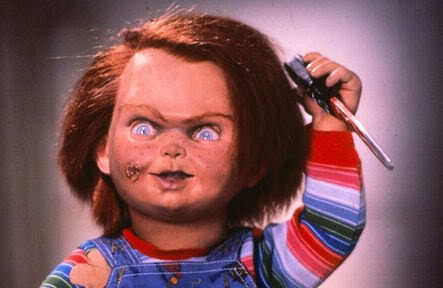
Chucky/Charles Lee Ray (Child's Play)
Chucky (or as a human;Charles Lee Ray, alternatively also dubbed The Lakeshore Strangler) first appeared on screens in 1988, in the first of what became a series of films; Child's Play. Five movies have followed the original and a sixth if planned, this is evidence that Chucky is a successful horror villain, rarely does a character continue for so many years.
"Chucky" is born when Charles takes a fatal shot from a pursuing detective, however, before his life ends, Charles manages to transfer his soul into a "Good Guy" doll, meaning he lives on. The good guy dolls have a preset number of phrases, one of which causes them to say their name, the doll which Charles becomes is called Chucky. From this point, Charles (further known as simply Chucky), only longs to be human once again, a selfish desire that he will stop at nothing to get, the only catch is that he can only possess the first person he told that he was not really a living doll and since Good Guy dolls are a popular toy, it should be easy to possess a child, or at least it seemed.

The reason that Chucky makes such a fearful character throughout his series of films is mostly due to his indestructible quality, we see him defeated time and time again, yet he finds a way to live on, through a single limb or being repaired to his original state. It is very difficult to fully stop Chucky's killing spree and this is a part of his character.

Dolls, puppets and odd looking children's toys are common fears, and so this also contributes alot to the fear factor of Chucky. Add the fact that not only is the doll itself slightly creepy looking, but that it is possessed by a murderous criminal and it begins to sum up into a classic horror character. Chucky also gets progressively more gruesome between films, originally he looks like any other Good Guy doll, but over time he gains scars and stitches with a steady loss of hair.


Chucky is not only successful as a horror character because of his fear factor, his personality also plays a huge part. He as a character is very likeable, he makes dark jokes and comments frequently, almost making the films seem like comedies. As the series progresses, the films also appear to become lighter too, leaving more room for comedy. This change is seen heavily between Child's Play 3 and Seed of Chucky.


The result of his popularity has been 6 (currently released) films and remakes of the originals already in progress. Alongside the films came a mass of merchandise when he was at his peak, yet it is still easy to find a Chucky doll or related items online and any horror collector would be lost without one.


Friday, 8 March 2013

Evaluation (2)


How effective is the combination of your product and ancillary texts?

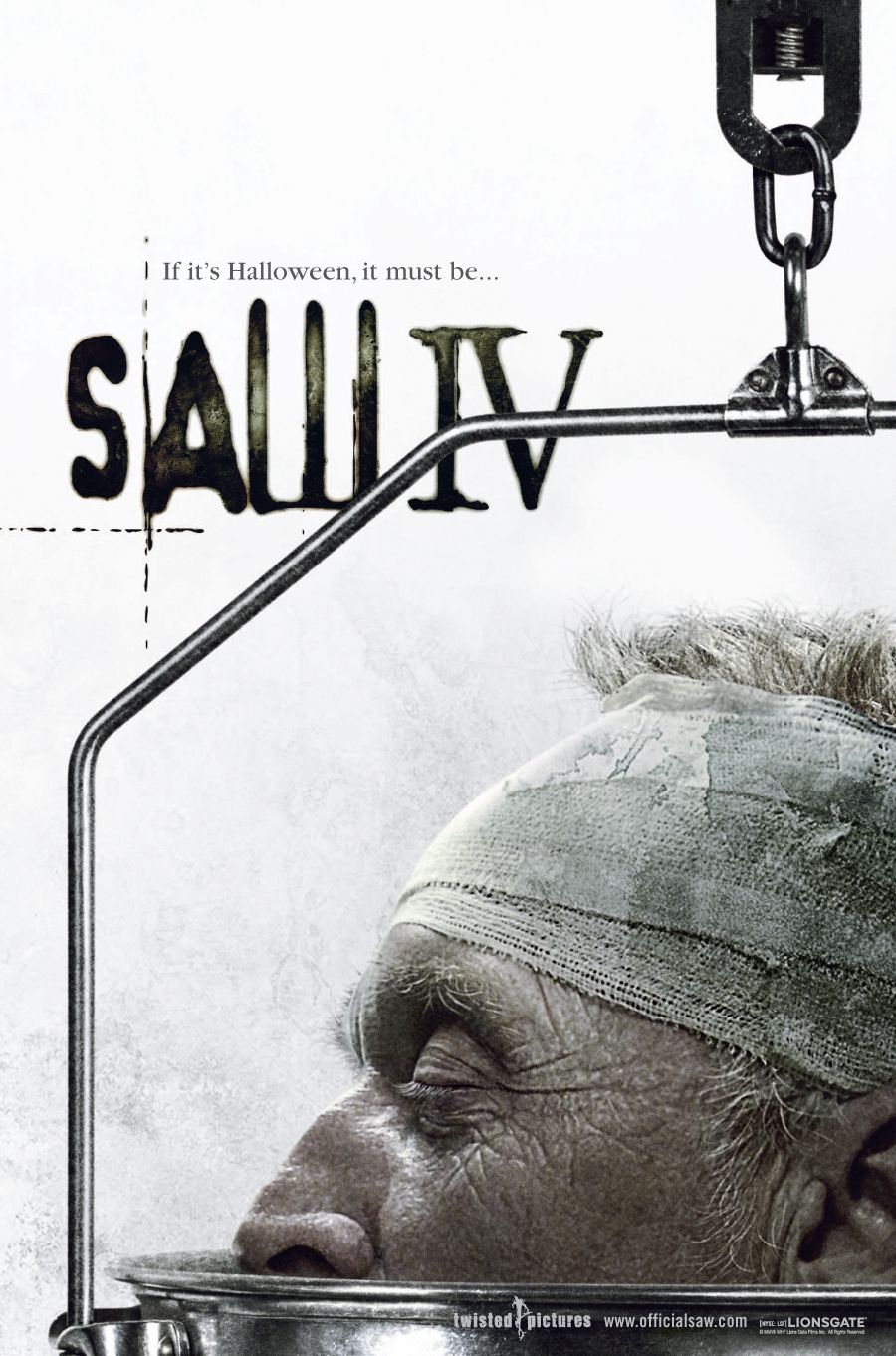
Film distributors have a number of ways of showcasing their film to the target audience; multiple trailer forms (cinema/TV/teaser), posters, magazine exclusive and even publicity stunts to gather attention. In short, the better the film distributors in doing their role, the more likely the film is to make a substantial profit or at least gain a relatively large reach. The creation of a brand image means that your product is easily identifiable, for example, the Saw films have similar posters/covers and are widely recognised. Having a brand image means a distinct design of the movie title, or a house style throughout a trailer/poster/magazine.

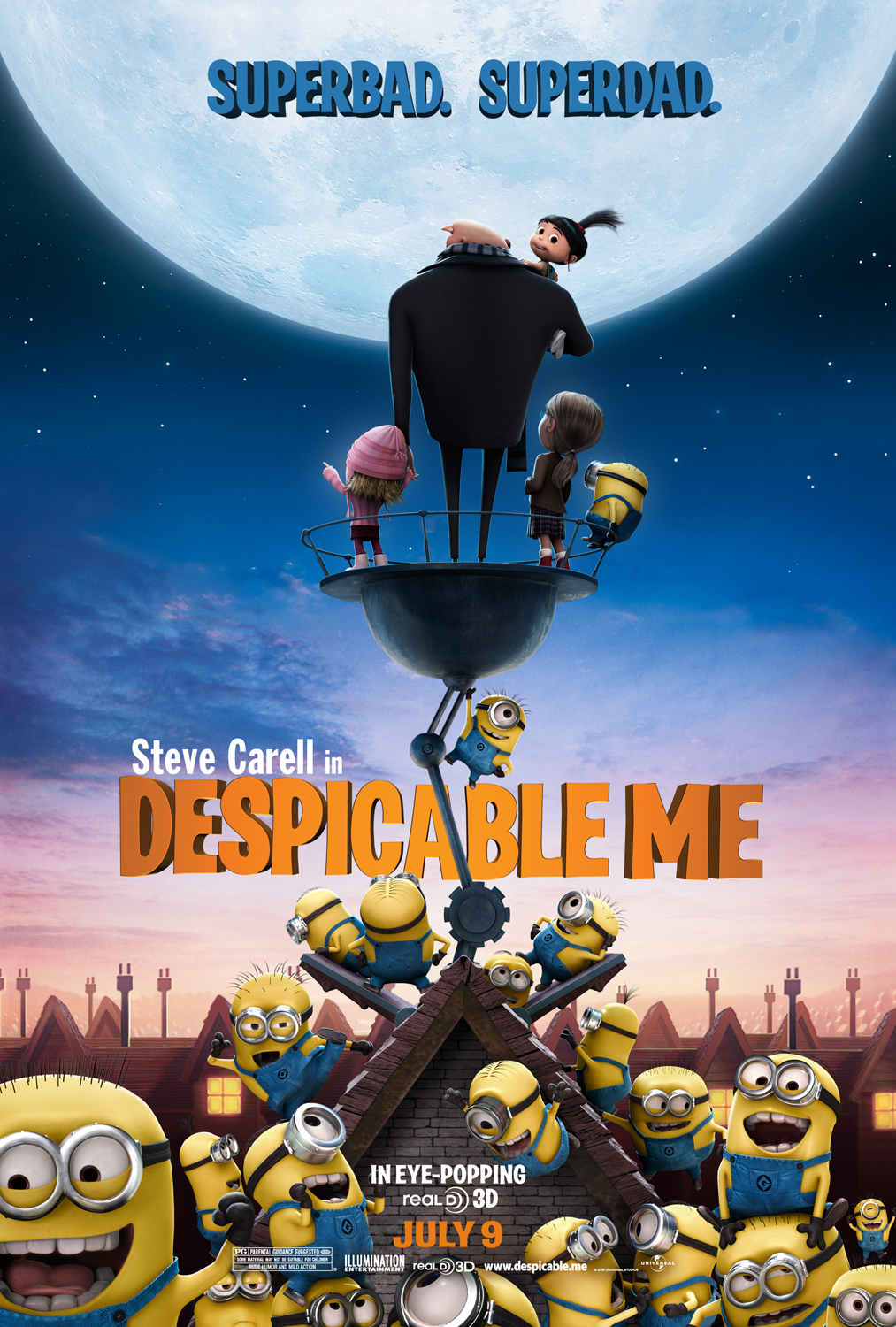
Marketing is based on your target audience, and for a horror film the target audience is generally teenagers. Due to the boom in the use of social networking sites, web ads may be the most effective for this genre as teenager often spend hours at a time browsing. Also, these adverts are often teasers, which sparks interest in the film and so their research begins. This can then be followed by the video being shared and expanding reach. As the age group and target audience changes however, the content and methods also change. Poster locations for a horror movie will not be the same as that of a child's film. Colour schemes among other properties change between genre and audience, the following are some examples:

Children's
Horror

Horror

Children's
 The posters use different captions, all relatively short but the children's films use easily understandable phrases, while the horrors use dark, luring captions. Not only does the locations where posters are placed change between genres, so do the channels on which the adverts are aired. Horror trailer may be restricted during the day in terms of content and frequency, but at night they have much more freedom. Children's films can be advertised at any time of the day but will appear mostly on the channels that children will be watching. The variation in colour between posters is also very noticeable, as the horror films use a small range of colour (with minimal contrast) while the other posters use bright clashing colours to stand out.
  
A teaser trailer which successfully went viral was for The Possession. I think this was effective as it was used a joke on friends rather than an actual trailer. The title itself gives no hint that it is for a trailer, and so until the sudden twist, the viewer is oblivious. If a jump scare is achieved from this, it should spark an interest into the film and the potential audience have been reached. As a horror fan, a friend sent me this exact video, and I had expected it to be like the countless other "high" children at dentist videos, but I was wrong and it caught my attention.

Creating an identity for a film is important in the sense that it makes it easily recognisable for the target audience, a colour scheme, selection of fonts and styles all come together in order to create such an identity.  As mentioned before, the Saw films have created an identity for themselves, their adverts and posters have a certain feel to them and so the viewer can quickly understand what they are seeing. This style carries on from the original teaser trailer, into posters and magazine covers until it finally reaches the DVD version, which often has a cover following the style. Each of these can contain various film reviews and awards on to flaunt the film's achievements to potential viewers, but as it is such a common technique to be rated "4 STARS" or something similar, it is rarely taken into account.
For Black Death, a certificate of 15 would be ideal but it would be more realistic to achieve an 18 rating. This is because the film having a lower classification would mean it is able to capture more of the teenage market, but due to some scenes of mild torture and gore it may not be possible. My poster uses an image of Meretta (Katherine) looking around, feeling she is being followed and the plague doctor behind her. This is a large part of the film's plot and so it was important to be shown in the poster. Also, the necklace has been brightened and distorted so that it stands out, indicating its' own importance. Horror movies tend to use dark and low-lit areas, and this is shown in the poster, however the trailer often lacks darkness. The title text itself looks as if it is becoming overgrown (as plants crop out from the bottom), which relates to the film itself because the majority takes place in a marsh.
Becoming the featured piece in a film magazine (especially one relating to your chosen genre) is a large step in promoting your film. Good reviews from credited critics can mean an increase in viewers because many people trust the judgement of said critics. Not only are you potentially increasing your viewers from those who regularly read the magazine, but if you reach the cover page, you are also reaching out to all those who see it in-store and this may spark interest.
My film poster
Inspiration: The idea that she is followed and in hiding
Inspiration: Colour scheme (tagline at top and house)


 -------------------------------------------------------------------------------------------------------------------


My magazine cover
Inspiration: Layout and a colour scheme


My cover was heavily based on the Fangoria, an American film magazine which revolves around horror movies. This was the perfect template for building my horror magazine on, they had a distinct style which I could recreate and apply my own content to. They use the same fonts and a general set of rules when it came to the colour scheme for each issue. The cover was created in the order of name, tagline, side features (film roll), main image, feature title, sub-titles and finally finishing touches such as barcode etc. Any tweaking of images was done in-between as and when a problem was noticed.

Tuesday, 5 March 2013

Evaluation (4)

How did you use media technologies in the construction and research, planning and evaluation stages?

Advances in technology; specifically the internet and the introduction of web 2.0, has meant that research for low budget film makers is easy and cheap. Social networking sites provide perfect locations for gathering recent information, Facebook for example allows its users to create polls which countless people could answer, this is a very effective method of research considering Facebook has over 1 billion users (most recent data). Most importantly of all, Facebook and similar social networking sites (such as Twitter and Tumblr) provide their services free of charge, a large factor to a filmmaker on a budget.

Not only has the ability to research become cheaper, it is also much cheaper to produce a film itself. While props and similar needs remain at the same cost, the recording equipment is much more widely available. Even mobile phones have relatively good standard recording capabilities, and so "found footage" movies are incredibly easy to make.

YouTube allows the user to upload their videos free of charge, for restricted or free viewing by the public. Following uploading a film onto YouTube, using other free services (as previously mentioned), film makers are able to share their video, which can in turn be shared, dramatically increasing reach. If for example, one person shared the film, this will reach all of their freinds, if two of those shared the film, it would reach all of their friends too, resulting in a huge reach completely free.

Logos and related images from tools used.

Photoshop, Premiere Pro and GarageBand meant that it was possible to create professional standard products with minimal training. There were more advanced features that if used correctly would have a substantial effect but this is not completely necessary. Naturally, problems were encountered with each of the software mentioned, but were overcome in some form. One such problem was trying to sync an overlay of sound with a clip of video (because the original sound was not loud enough), eventually, this was achieved by precise placing in the timeline and trial and error.

Photoshop was used in the creation of the poster and magazine cover. Part of my design for my poster included the emphasis of the necklace, this was achieved by using Photoshop's layers and changing hue and saturation settings. Eventually the necklace was on a layer above the one wearing it, meaning that it could be given a "negative" looking effect, making it stand out from the rest of the much darker background.

Garageband was used for originally used to create unique sound effects and music, however a lack of experience with the program and little musical knowledge meant that it was quite difficult to progress, even with the simplicity of Garageband's interface. Using Garageband would mean that the music would be completely original and unique to the trailer/film itself, but in the end effects/music that did not have copyright were used.


Websites were important in the research stage of production, IMDB and Google were perhaps the most important of the sites. IMDB (Internet Movie Database) cotains the details for the majority of movies, from cinema blockbusters to small limited releases, this meant that popular movies that were mentioned in questionnaires could be looked at in detail. Links could be made between movies to to try and understand what the target audience would like.

Google, being one of the most popular internet search engines was used for all information that could not be found through IMDB. This was a quick way of finding the little facts that did not exist in the regular places.

In using the various technologies to produce a poster, magazine cover and trailer, my skill with each has improved. New features are at my disposal that were not used  before and my creativity has been expressed and developed. Improvement lies mostly with Premiere Pro, as it was new software to me and I can now use it to create and edit to a good standard.

Monday, 4 March 2013

Representation of women in horror


Representation of women in horror films

This essay will look at the representation of women in horror films, looking closely at two theorists. Along with these theories, a number of films will also be referenced as examples or for comparison purposes. Films that will be used as examples in this essay are Halloween (John Carpenter, 1978), The Crazies (Rahda Mitchell, 2010), The Thing (Mary Elizabeth Winstead, 2011) and The Descent (Shauna Macdonald, 2005). These movies apply to one, both or neither of the theories, making them fitting examples.


 Carol Clover is the first theorist that will be mentioned, Clover is responsible for publishing the “Final Girl” theory. This theory applies to all of my selected examples in some form, though some more than others. Essentially, the theory relates to the one girl that survives at the end of the film, making her the final girl, and Clover’s theory also shows some of the stereotypical traits of this girl (slightly masculine, often a virgin, well behaved and pays attention). Before the final girl, it was often shown as males rescuing a damsel in distress; this shows how attitudes in film have changed. Halloween’s final girl is Laurie Strode, who follows all of the traits that Clover had listed, she is virginal and more masculine than her friends (she is not as feminine in the way she acts and presents herself), she avoids adult activities like sex and drinking though there is an exception when Laurie and Annie were smoking, what we can safely assume was not a standard cigarette. The Crazies does not have a final girl exactly, but one female does survive with the help of her husband and because of this is the least relatable of the four. It is not just that her husband helped her survive that makes this film less relatable, it is also the fact that we are not certain that she does survive, at the end of the film she is alive but the ending implies that the containment protocol would result in the destruction of another town and no doubt their deaths. The Thing is similar to Halloween in the sense that it can be related to the final girl theory very easily, Kate Lloyd is intelligent but tough. It is her who figures out the “thing” cannot duplicate non-organic material and potentially saving lives. Finally, The Descent ends with Sarah being the final girl. She is the most unstable of the friends due to the death of her husband and daughter, but this causes her tougher personality.


Laura Mulvey is the theorist who is responsible for theorising the “Male Gaze”. The male gaze is the use of cinematic techniques to put viewer in the place of a male who looks at a female in a particular way. This theory is much more difficult to apply to the chosen films as there is very little or no evidence of the male gaze in some of the films. In Halloween, the male gaze exists as Michael Myers stares through watching Annie get (un)dressed, but very little evidence exists in other areas. The Crazies shows no evidence of the male gaze; this is likely to due to the mass destruction rather than the single killer that we see in Halloween. Amidst all of the chaos, realistically there would be little time for the male gaze to fit in appropriately. The Thing also does not use the male gaze throughout, there is a feeling of distrust throughout the film and so none of the characters would allow themselves to be distracted in such a situation, because it would most certainly lead to death.  Finally, The Descent, for the most part only includes a female group of friends and because of this there are many opportunities to include the male gaze. A vast amount of the film is underground, featuring the group of female friends and the only POV style shots we see are those from their camera (which at times becomes their only way to navigate in the dark, quite typical of the genre). The group are all wearing practical, yet tight clothes which contribute to the male gaze.

The two theories are very different when compared to one another and each will relate to a film more easily dependant on the sub-genres. Clover’s theory seems to be more commonly applicable to movies within the horror genre whereas Mulvey’s theory may be more easily applied to another genre. Perhaps this would be different if films from an earlier age were used. The main difference between the two theories is that Clover’s shows women on camera to be powerful and often intelligent against their pursuer given they follow the criteria to be the final girl, whereas Mulvey states that the majority of women featured on camera in horror films are just objects to be looked at, rather than characters themselves. Based on this, Clover’s theory would be looking at women in the horror genre in a positive light were and Mulvey would be the opposite, which is clearly negative.

Given my selected films and how easily they can relate to each of the two theories, I believe that Carol Clover and the “Final Girl” theory appears more often in horror films than the male gaze, my selected films show some evidence of this, more of them could apply to the final girl theory than they could to the male gaze. Only one of the four films could be easily related to the male gaze, this could be coincidence from choices or it could be that it is just less common. I do not think that the horror genre shows the female characters in a negative way, there are some exceptions which might as with any genre but for the most part they are relatively equal in representation when compared to the male characters. Clover’s theory has changed critical attitude (as it intended) and women can prevail just as often as survivors as men do, it is not always males saving females in horror anymore.

Roots in classic literature presentation


Tuesday, 15 January 2013

Questionnaire results

Horror Movie Questionnaire - Results
What is your gender?
Female 7
Male 10
How old are you?
12 to 18 13
19 to 25 1
26 or over 2
What is your favourite genre of film?
Comedy 10
Horror 6
Adventure 1
Action 3
Sci-fi 2
If you enjoy the horror genre, what is your favourite horror film?
The Omen (x2)
The Loved Ones (x2)
The Lost Boys
The Thing
Pulse
The Strangers
How often do you watch movies from the horror genre?
At least once a day 2
Once every few days 2
Once a week 2
Once a month 5
Rarely 5
Not at all 1
Which of these places are you most likely to see a horror?
At home 11
The cinema 2
At a friend's 4
What attracts you to a horror film?
Suspense
Complex, interesting story lines
Boredom
Top quality physical special effects
The women
Storyline
The blurb and sometimes the cover
Scary-ness
Pain
Good marketing/friends
The plot/good effects
Girls
Blood
Friends
Can the actors of a film affect your desire to see it?
Yes 11
No 2
Sometimes 4
What genre of horror do you enjoy the most?
Comedy 4
Slasher 2
Zombie 5
Torture 1
Natural 1
Psychological 9
Splatter 1
Others;  0
What about the sub-genre appeals to you?
They do ridiculous things Comedy
Because its funny Comedy
Make me laugh Comedy
Effects Psycho/torture
The fact it could happen at any time Natural
Blood and guts Slasher/splatter/zombie
I <3 zombies Comedy/psycho/slasher/zombie
Zombiezzz Zombie
Jump scares Zombie
Storyline Psycho
Messes with their heads Psycho
Suspense Psycho
Interesting storylines Psycho
The fact it can confuse you Psycho
Do any of the sub-genres deter you?
Comedy 2
Slasher 3
Zombie 3
Torture 3
Natural 0
Psychological 1
Splatter 3
Others;  Supernatural(1) , Ghost(1)
If any, what about the sub-genre(s) deters you?
Not being serious Comedy
Can put you off the film Splatter
Boring Splatter
I'm a wimp Torture/slasher/zombie/splatter
Not entertaining for me Torture
They are boring and predictable Ghost
I don't like rape No genre
Torture. Eww. Torture
Usually a let-down ending deflates my enthusiasm for the film Supernatural
Because they are really unrealistic Zombie
Repetitive Slasher
Rape No Genre
Creepy shit Psychological
Too many brains Zombie
I don't like torture Slasher
Most memorable movie moment:
Hiding behind a pillow and headbutting a wall whilst watching The Omen
Mirrors, rip her jaw off.
Electric screwdriver to the head
Pyramid head tearing the skin from a woman and throwing it - Silent Hill
Saw - Man getting axed in half.
I love when Leahterface stands against the sun in TCM and is running along the highway with a chainsaw.
The main character escapes and throws an electric screwdriver at his torturer (The Loved ones)
Aliens eating people
Damien being attacked by monkeys (The Omen)
Most disliked horror movie moment:
Silent Hill
Saw
Anything with gore
Rape scene in the last house on the left
Twilight - all of it
Seeing monsters/villains on screen too much
Saw's chopping foot off
Can a film's certificate affect your desire to see it?
Yes 6
No 11

Questionnaire


Media Studies: Pre-trailer Questionnaire

1.    What is your gender?

Male
Female

 This question was appropriate for noticing patterns in preference dependant on age and gender.

2.    How old are you?

12-18
19-25
26+


3.    What is your favourite genre of film?


 The answer of this question will change the results of the following questions dramatically.

4.    If you enjoy the horror genre, what is your favourite horror film? (If not, leave blank)


 If a film appears more than once, then a similar film would perform well.

5.    How often do you watch movies from the horror genre?

At least once a day
Once every few days
Once a week
Once a month
Rarely
Not at all

 How often could affect the likelihood of potential viewers choosing your film.

6.    Which of these places are you most likely to see a horror?

At home
The cinema
At a friend’s

 This relies on when they would see the movie, a cinema viewing would offer a different profit to a DVD viewing (home).

7.    What attracts you to a horror film?


 Key features should be included in the film.

8.    Can the actors of a film affect your desire to see it?

Yes
No
Sometimes

 Some people find that actors can attract or deter them, the potential audience's view should be noted.

9.    What sub-genre of horror do you enjoy the most?

Comedy
Torture
Psychological
Slasher
Natural
Splatter
Zombie
Other:

 Important to understand the sub-genre of film that should be aimed for.

10.           What about the sub-genre in Q9 appeals to you?


 What specifically is needed?


11.             Do any of the sub-genres deter you?

Comedy
Torture
Psychological
Slasher
Natural
Splatter
Zombie
Other:

 Understanding the genres that should be avoided.

12.             If any, what about the sub-genre(s) deters you?


 What specifically should be avoided?

13.             Most memorable horror movie moment:


   For the purpose of recreating something similar.

14.             Most disliked horror movie moment:


    Once again for understanding what should be avoided
15.             Can a film’s certificate affect your desire to see it?

Yes
No

 What certificate should be aimed for?

Other comments:


Thank you for taking part in this questionnaire